Wednesday, June 8, 2011
Western Civilizations Final Question 10 -Do you feel like you've learned something this year?
I most definitely feel like I've learned something over this past semester. In fact, I've learned much more than just "something." To be honest, social studies has always been one of my favorite subjects, even as a little kid. History and the way people interacted and things like that have always fascinated me. Being able to study things I was already interested in was great, and I learned so much more than I had in the past with these topics. Before, when I had lessons on people like Alexander the Great, the details were very vague, and even after two weeks of studying him, I had no idea who this man was. I knew he ran around Europe and Asia with a giant army and practically conquered the whole world, but I didn't know who he was as a person until this year. Now, to me, his life seems much more exciting. He dealt with insanity, alcoholism, sexual conflict, issues with his family, and so much more on top of all of the conventional things he did. And every topic we studied this semester was like that. I really feel like I can walk away from this class, knowing so much more than I did in January. And the best part is that not only did I learn all of that on those topics, but now I know where to go to find even more information if I'm ever just feeling curious. I really feel like I got a lot out of this class over the past semester. Thank you for that.

Western Civilizations Final Question 9
A Renaissance man was someone who lived during the Renaissance, and was very knowledgeable in many areas. For instance, he (or she) may be very talented with literature, but also very good with science. In my opinion, Leonardo Di Vinci is the ultimate definition of the term, "Renaissance man."
Even as a young child, Di Vinci showed promise in things like painting and sculpture. His mentor as a child was Verrocchio, the famed painter. As he grew older, Leonardo became more and more talented with his works, and eventually created masterpieces like The Mona Lisa and The Last Supper. It is actually suspected by some people that an artifact like the Shroud of Turin was actually made by Di Vinci himself, using paints and other artistic methods to fake the imprint of Christ's face and body.
Though art was what he had originally been trained in, Leonardo Di Vinci was talented in practically all areas. he had been born left-handed, but trained to use his write as well, so that he would not be punished by his teachers. When he did write with his left hand, he wrote upside down and backwards, almost like his own secret code. The pages of his journals that historians have found are covered in genius ideas for inventions, brilliant literary works, and even some complicated mathematic equations. The Wright Brothers actually took a look at Di Vinci's design for the flying machine before constructing their own similar model of an airplane that actually took flight. Though he had always been a child prodigy when it came to art, Leonardo Di Vinci made it his job to collect as much information as possible, and become an expert in all areas- a true Renaissance man.
Even as a young child, Di Vinci showed promise in things like painting and sculpture. His mentor as a child was Verrocchio, the famed painter. As he grew older, Leonardo became more and more talented with his works, and eventually created masterpieces like The Mona Lisa and The Last Supper. It is actually suspected by some people that an artifact like the Shroud of Turin was actually made by Di Vinci himself, using paints and other artistic methods to fake the imprint of Christ's face and body.
Though art was what he had originally been trained in, Leonardo Di Vinci was talented in practically all areas. he had been born left-handed, but trained to use his write as well, so that he would not be punished by his teachers. When he did write with his left hand, he wrote upside down and backwards, almost like his own secret code. The pages of his journals that historians have found are covered in genius ideas for inventions, brilliant literary works, and even some complicated mathematic equations. The Wright Brothers actually took a look at Di Vinci's design for the flying machine before constructing their own similar model of an airplane that actually took flight. Though he had always been a child prodigy when it came to art, Leonardo Di Vinci made it his job to collect as much information as possible, and become an expert in all areas- a true Renaissance man.
Western Civilizations Final Question 8
Romanesque:


.jpg/450px-Nivelles_JPG00_(13).jpg)
The thick walls and low lighting display very well the belief system of the Romans when it came to religion. They were very focused on protection and preparation for judgement day, so the protection that would be supplied by these structures shows the connection between the beliefs and their architecture. The first image is a sacrifice scene, to please God, which is another obvious way of showing that the Romans were very focused on being completely ready for judgement day.
Gothic:


Gothic architecture really displays the happiness the people of the renaissance found in worship. They believed that the Lord was your light, and you should let him into your life. That explains the thin walls and colorful stained glass windows. Whenever the light would shine into the church, it would be in all these beautiful colors, reminding people the goodness of God.
Gothic:


Western Civilizations Final Question 7
The spread of the black death came about because of the lack of sanitation in Europe. The plague that started the black death was a disease that was carried by fleas. These fleas would find homes on the rats in the streets of the cities in Europe. There were so many rats that most people found it normal to be bitten by one or something to that effect. What the people didn't know was that the rats were actually carrying a disease called the Bubonic Plague, which was the disease that spread through Europe and became known as the Black Plague. It spread so quickly between people in Europe not only because of the rats, but also because of the lack of indoor plumbing provided. Human waste was thrown out into the streets, where people without homes lived and slept on the ground. If you didn't have a home, you were sick pretty fast. For the people of Europe, the spread of this disease meant that no one was really safe anywhere. If you tried to take care of a family member with the plague, there was a very good chance that you yourself could catch it. Doctors didn't tend to live long, because they contracted the disease very quickly as well, being exposed to it all the time. For a very long time, shops were down, people had absolutely no money, and everyone was dying. It seemed there was no hope for the people of Europe.
Western Civilizations Final Question 6
SAVE OUR HOMELAND, JERUSALEM

JOIN AND FIGHT FOR YOUR ANCESTORS ...... SAVE THE ONE THAT SAVES YOU

I, RICHARD THE LIONHEARTED, ask you to join and fight for your brothers, sisters, mothers, fathers, and their fathers, and then unto their fathers. You will be remembered as the savior to thy Holy father. He will thank you and be grateful.
Saladin's Letter To The Editor:
To be completely honest, I don't know exactly what these Christians think they're doing. I haven't done much study in the field of their religion, but aren't they against killing? I don't think their religion would approve of what they're doing. Just last week,they slaughtered 1,000 of my men from Acre. I mean, yes, I refused to meet with Richard, but that was because he had already come to battle with me, so I had decided to kill him. You can't just sit down and have dinner with the man you intend to kill. But if he had come to me without all of that battle armor, I would have been happy to work something out with him.
However, as it stands, Jerusalem is the land of my people. It was Allah's will that we were able to gain possession of this land, and we have every right to keep it. I suppose in time, Richard will get close enough to Jerusalem that he could, in theory, take it back. But we will be ready when that day comes. Who knows? Maybe one day we'll learn to share it and live in peace like two civilized nations.
Western Civilizations Final Question 4
I chose this article (http://topics.nytimes.com/top/reference/timestopics/subjects/s/sept_11_2001/index.html?scp=1-spot&sq=September%2011&st=cse) for its similarity to the philosopher Thucydides, because of its focus on fact and detail. Thucydides was called the "Father of Scientific History," for his use of fact and detail.
Western Civilizations Final Question 3
Ancient Egypt and Ancient Greece were two societies with different views when it came to death. What to do with the body was a big difference in the two cultures. In Ancient Greece, things were done quite like they are today. The body is dressed and made to look nice, and then it is taken to the funeral procession where it is either burred or cremated. The Egyptians, on the other hand, removed all of the vital organs from the body, and left it in its tomb where it was never to be disturbed again.
Western Civilizations Final Question 2
BCR: The agricultural revolution was a time when the nomadic people of the neolithic era decided to settle down in one place to form a community. These communities formed families, jobs, farms, and routines for day-to-day life, instead of the unknown adventures their ancestors previously faced every day. When these groups of people decided to settle down, things like trading and currency began to take a very vague shadow. These communities of people eventually turned to towns, which, if the population grew enough, made their way into becoming a city. The process took time, but the places that there was abundance in resources were bound to have more people in the area than in places with fewer resources. With people growing their own crops, communities grew even faster. And if these people had never settled down in the first place, large metropolises may have never been formed, because people would just remain constantly on the move.
View Agricultural Revolution in a larger map
See map description for reasoning.
News Article:
THIS JUST IN: The last of the agricultural businesses in the world have all failed.
View Agricultural Revolution in a larger map
See map description for reasoning.
News Article:
THIS JUST IN: The last of the agricultural businesses in the world have all failed.
Monday, May 23, 2011
Freshman Year: Mission Impossible.... COMPLETE.
Throughout all of life's troubles and obstacles, one hero has learned to stand on her own. The loss of close friends, the gain of new ones, the added homework and raised expectations of academic life, and everything in between could not stop Megan Greig from coming out of her freshman year at the John Carroll School like a winner.
In the months before her first day at good ol' JC, the one thing people told Megan over and over again was that in order to really succeed in a place like this she had to get involved. People told her to find out what she liked, and join organizations that suited those interests. Before even setting foot on John Carroll campus for the first time, Megan had a very extensive list of things that she wanted to accomplish at school. Some of them, like newspaper and the National Honors Society, could not be accomplished during her freshman year, due to rules set up by the system. But other goals, like the school play, orchestra, and the speech and debate team, were met and conquered with a bit of effort and true spirit.
However, even heroes have their moments. In fact, Megan's first moment at John Carroll was actually the moment that she had to be escorted to the chorus room on her first morning by the dean of students, because she wasn't sure exactly where to go. (oops!) But eventually things like the morning routine to chorus and class schedules became something of the everyday experience, and for a while, Megan felt like there was nothing she couldn't handle.
Though her classes became a bit more demanding, and she found she had less free time than in years past, academics were a great part in Megan's day. Most of her classes were very interesting, and instead of asking much of only your memory, the curricula often begged you to think for yourself in your own situations, and not always "play it by the rules." The teachers, always incredibly passionate about their jobs, were very helpful in classes, and gave Megan a sort of inspiration that kept her wanting to know more. Even in math class, Megan found she was dosing off less and picking up more information that she knew was going to help her in the years to come.
Friendships had always been somewhat of an issue for Megan. She had always had some kind of friend growing up, but the friendships never seemed to last very long. This past year, in fact, Megan had lost many of her friends due to the fact that they didn't like that she had decided to embark on the journey of attending JC. For their own reasons, they became angry with Megan and communications between them seemed to be slowly dying. However, two or three of Megan's old friends had followed her to John Carroll, and they became closer than ever. As grateful as Megan was for the remained companionship, perhaps it wasn't the lasting friendships, but the new imposing ones that made this year worthwhile. Many angels had been sent down from heaven to give Megan more strength, courage, and happiness. These angels came in the form of new friends. It surprised Megan how much they cared for her, even after knowing her only a short time.It wasn't long before Megan knew in her heart that she could go to these people for anything. These relationships meant the world to her.
Megan can now look back on her past year at John Carroll and say that this has been the best school year that she can ever remember. Lots of things are changing next year, and there are actually a lot of people who are leaving Megan's life for a while. But this past year has shown her that above all, if you really want something bad enough, and you have that much passion for it, you'll get there one day. So the people that are going away for a while won't be gone, they're just not right next to her all the time. She knows they'll come back if they're meant to, and if they're not, then the time they spent in Megan's life has meant the world. From her freshman year at John Carroll, our hero, Megan Greig, has learned plenty. But now she sees that there are three years still in the distance, full of adventure and just waiting to be uncovered.
In the months before her first day at good ol' JC, the one thing people told Megan over and over again was that in order to really succeed in a place like this she had to get involved. People told her to find out what she liked, and join organizations that suited those interests. Before even setting foot on John Carroll campus for the first time, Megan had a very extensive list of things that she wanted to accomplish at school. Some of them, like newspaper and the National Honors Society, could not be accomplished during her freshman year, due to rules set up by the system. But other goals, like the school play, orchestra, and the speech and debate team, were met and conquered with a bit of effort and true spirit.
However, even heroes have their moments. In fact, Megan's first moment at John Carroll was actually the moment that she had to be escorted to the chorus room on her first morning by the dean of students, because she wasn't sure exactly where to go. (oops!) But eventually things like the morning routine to chorus and class schedules became something of the everyday experience, and for a while, Megan felt like there was nothing she couldn't handle.
Though her classes became a bit more demanding, and she found she had less free time than in years past, academics were a great part in Megan's day. Most of her classes were very interesting, and instead of asking much of only your memory, the curricula often begged you to think for yourself in your own situations, and not always "play it by the rules." The teachers, always incredibly passionate about their jobs, were very helpful in classes, and gave Megan a sort of inspiration that kept her wanting to know more. Even in math class, Megan found she was dosing off less and picking up more information that she knew was going to help her in the years to come.
Friendships had always been somewhat of an issue for Megan. She had always had some kind of friend growing up, but the friendships never seemed to last very long. This past year, in fact, Megan had lost many of her friends due to the fact that they didn't like that she had decided to embark on the journey of attending JC. For their own reasons, they became angry with Megan and communications between them seemed to be slowly dying. However, two or three of Megan's old friends had followed her to John Carroll, and they became closer than ever. As grateful as Megan was for the remained companionship, perhaps it wasn't the lasting friendships, but the new imposing ones that made this year worthwhile. Many angels had been sent down from heaven to give Megan more strength, courage, and happiness. These angels came in the form of new friends. It surprised Megan how much they cared for her, even after knowing her only a short time.It wasn't long before Megan knew in her heart that she could go to these people for anything. These relationships meant the world to her.
Megan can now look back on her past year at John Carroll and say that this has been the best school year that she can ever remember. Lots of things are changing next year, and there are actually a lot of people who are leaving Megan's life for a while. But this past year has shown her that above all, if you really want something bad enough, and you have that much passion for it, you'll get there one day. So the people that are going away for a while won't be gone, they're just not right next to her all the time. She knows they'll come back if they're meant to, and if they're not, then the time they spent in Megan's life has meant the world. From her freshman year at John Carroll, our hero, Megan Greig, has learned plenty. But now she sees that there are three years still in the distance, full of adventure and just waiting to be uncovered.
Friday, May 20, 2011
Monday, May 9, 2011
Crusades Final
During the middle Ages, the whole of Europe experienced much violence and sickness through their development. Through all of this suffering and chaos, people looked to religion to ease their worries. Religion has always been an aspect of humanity that, ironically, both heals and causes troubles. Because people were so passionate about their gods and what they believed in, there was much violence on the subject, and some of that violence even became wars, called the crusades. Because religion was one of the biggest parts of the culture in the middle Ages, the crusades are a huge part of studying that era, and it is essential that one takes the time to study them if one was to truly understand the culture of that time period.
The crusades, essentially, were a series of wars fought between the Christians and the Muslims in Europe and Northern Africa. This document, given to the Frankish Army at the beginning of the crusades, states:
"Now we hope that none of you will be slain, but we wish you to know that the kingdom of heaven will be given as a reward to those who shall be killed in this war. For the Omnipotent knows that they lost their lives fighting for the truth of the faith, for the preservation of their country,, aiid the defence of Christians. And therefore God will give then, the reward which we have named. " This is saying that the Church is recognizing that it is against the Ten Commandments to kill, however, one who dies in battle for God will be forgiven of his sins, no matter how many men he's killed. The fact that this was issued so surely to the European armies who were fighting for Christianity shows how desperate the Catholic church was to keep hold of its power. The church had to be positive that they would not lose control of the people in Europe, and the Muslims, who did not wish to follow the orders of the church posed that threat.
Another issue the Catholic church was concerned with was that the Muslims had gained control of their holy land, Jerusalem. The History Channel Website states that "Though the goals of various Crusades varied, their primary aims were fervently religious: retake control of the Holy Land, conquer pagan areas and check the spead of Islam. " Again, the main concern of the church during the crusades was power, which goes hand in hand with ownership of land. The possession of that holy land meant that the church was in control of what happened on that ground, and that it was kept sacred. They did not want the Muslim religion being celebrated on the land where their ancestors had practiced Christianity and Judaism. The goal of the crusades was to take back what they had considered to be "rightly" theirs.
that a pagan race had overcome the Christians and with horrible cruelty had
The fact that the crusades in the middle Ages even took place shows somewhat the panic that the church was experience with all of the chaos that was happening, even outside the religious word. While religion was a huge part of most people's lives, there was also much that people were distracted by, and religion was losing value for those who were not very strong on their faith to begin with. This panicked the church even more so, and it was evident that other religions were beginning to crop up. An article issued by Gregory VII says, "a pagan race had overcome the Christians and with horrible cruelty had devastated everything almost to the walls of Constantinople, and were now governing the conquered lands with tyrannical violence, and that they had slain many thousands of Christians as if they were but sheep. If we love God and wish to be recognized as Christians, we should be filled with grief at the misfortune of this great empire [the Greek] and the murder of so many Christians." The main focus from this excerpt is that Gregory VII sees all of these people (the pagans and the Greeks for example) as threats, because their beliefs were contrary to the church. With all the disease and poverty going through Europe, any extra loss of control was incredibly detrimental to the church. The event of the crusades made the Catholic church seem more powerful and put more reassurance back into the church, which calmed the Christian people down a bit.
The reasoning in the crusades is possibly the biggest reason one must study them to understand the culture of the middle Ages, because it brings up the prominence of the church in that time period. There was a very large loss of control in the Church, and the fact that commandments were ignored and altered in the process of these wars shows how insecure the leaders could be. When one studies the crusades, they begin to understand the instability of the governments that existed all across Europe.
Wednesday, May 4, 2011
Crusades Essay- Draft
During the middle Ages, the whole of Europe experienced much violence and sickness through their development. Through all of this suffering and chaos, people looked to religion to ease their worries. Religion has always been an aspect of humanity that, ironically, both heals and causes troubles. Because people were so passionate about their gods and what they believed in, there was much violence on the subject, and some of that violence even became wars, called the crusades. Because religion was one of the biggest parts of the culture in the middle Ages, the crusades are a huge part of studying that era, and it is essential that one takes the time to study them if one was to truly understand the culture of that time period. (The crusades are not important in the study of the middle Ages, because religion was not a big factor in the culture of that time.)
The crusades, essentially, were a series of wars fought between the Christians and the Muslims in Europe and Northern Africa. This document, given to the Frankish Army at the beginning of the crusades, states:
"Now we hope that none of you will be slain, but we wish you to know that the kingdom of heaven will be given as a reward to those who shall be killed in this war. For the Omnipotent knows that they lost their lives fighting for the truth of the faith, for the preservation of their country,, aiid the defence of Christians. And therefore God will give then, the reward which we have named. " This is saying that the Church is recognizing that it is against the Ten Commandments to kill, however, one who dies in battle for God will be forgiven of his sins, no matter how many men he's killed. The fact that this was issued so surely to the European armies who were fighting for Christianity shows how desperate the Catholic church was to keep hold of its power. The church had to be positive that they would not lose control of the people in Europe, and the Muslims, who did not wish to follow the orders of the church posed that threat.
Another issue the Catholic church was concerned with was that the Muslims had gained control of their holy land, Jerusalem. The History Channel Website states that "Though the goals of various Crusades varied, their primary aims were fervently religious: retake control of the Holy Land, conquer pagan areas and check the spead of Islam. " Again, the main concern of the church during the crusades was power, which goes hand in hand with ownership of land. The possession of that holy land meant that the church was in control of what happened on that ground, and that it was kept sacred. They did not want the Muslim religion being celebrated on the land where their ancestors had practiced Christianity and Judaism. The goal of the crusades was to take back what they had considered to be "rightly" theirs.
The fact that the crusades in the middle Ages even took place shows somewhat the panic that the church was experience with all of the chaos that was happening, even outside the religious word. While religion was a huge part of most people's lives, there was also much that people were distracted by, and religion was losing value for those who were not very strong on their faith to begin with. This panicked the church even more so, and it was evident that other religions were beginning to crop up. An article issued by Gregory VII says, "a pagan race had overcome the Christians and with horrible cruelty had devastated everything almost to the walls of Constantinople, and were now governing the conquered lands with tyrannical violence, and that they had slain many thousands of Christians as if they were but sheep. If we love God and wish to be recognized as Christians, we should be filled with grief at the misfortune of this great empire [the Greek] and the murder of so many Christians." The main focus from this excerpt is that Gregory VII sees all of these people (the pagans and the Greeks for example) as threats, because their beliefs were contrary to the church. With all the disease and poverty going through Europe, any extra loss of control was incredibly detrimental to the church. The event of the crusades made the Catholic church seem more powerful and put more reassurance back into the church, which calmed the Christian people down a bit.
The reasoning in the crusades is possibly the biggest reason one must study them to understand the culture of the middle Ages, because it brings up the prominence of the church in that time period. There was a very large loss of control in the Church, and the fact that commandments were ignored and altered in the process of these wars shows how insecure the leaders could be. When one studies the crusades, they begin to understand the instability of the governments that existed all across Europe.
Sources:
http://www.fordham.edu/halsall/source/g7-cde1078.html
http://www.fordham.edu/halsall/source/g7-cde1078.html
http://www.fordham.edu/halsall/source/leo4-ind850.html
http://www.fordham.edu/halsall/source/g7-cde1078.html
http://www.fordham.edu/halsall/source/g7-cde1078.html
http://www.fordham.edu/halsall/source/leo4-ind850.html
Friday, April 29, 2011
Architecture Rough Draft
During and in the times after the Roman empire, there were many changes in the way buildings, especially of religious significance, were built. These buildings were made to display the kinds of things the people in these eras believed in. The Romanesque culture was focused more on sacrificing and preparing for judgment day. They knew that there would be another time when the Lord would return, and they stressed that one had to be ready on his/her own day of judgment. On the other hand, people in the Gothic era were more focused on the goodness of the Lord and how he was a sort of light in one's life. The evidence of religion in the architecture of both the Romanesque and Gothic periods is very clear, and shown in many aspects of the structures such as size, lighting, images, and windows.
The images on the fronts of the buildings were a big indication as to what sort of belief was being celebrated during the time the building was made. As shown below in figure 1 on the Schöngrabern in lower Austria, the images seen on the fronts of the buildings in Romanesque times featured scenes of sacrifice to God and things that would make him happy, to show that the people were worthy to be accepted into the kingdom of heaven. Meanwhile, as seen on the front of St. John's Cathedral in old Lyon, France, the fronts of buildings in the Gothic era were often of saints together, or formations that look like beautiful flowers and pieces of nature. This sort of image portrays the true happiness one would experience with God, which was the general idea of religion in that time period. The designs on the front of the churches are especially visual, and really display the biggest values of the religious community during that era very well.
Another interesting aspect of the architecture that really brings out the religious aspects of the people were the windows in these buildings. In Romanesque times, (figure 3, St. Gertrude Collegiate church in Belgium) there were few to no windows inside the buildings. The windows that did appear were very thick in the walls around them. This was a display of the sort of seriousness the Romans had about religion. Because their major concern in religion was preparation for judgment day, they didn't focus on decorations and fancy things within the windows. The buildings were often plain and single-toned, to show the strength of the church. On the other hand, Gothic churches such as Pöide church in Estonia (figure 4) had colorful stained-glass windows that displayed images of the saints and angels. This added beauty and feeling into the church, again showing the beautification of what it meant to follow God.
Possibly the most obvious piece of evidence is the total exterior form of the buildings. During the Romanesque times, as seen if you look at St. Gertrude Collegiate in Belgium (figure 5) the buildings don't look as elegant as the ones during the Gothic times, like the front of the Milan cathedral in France. (figure 6) This is because the buildings in Romanesque times were made to look more like protecting fortresses, and the Gothic structures looked more like castles. This was a way of displaying grace and beauty in the religious life, while the Romans were, again, focused more on protection (the purpose of a fortress) and preparation, for when the Lord comes to judge them again. As someone even comes to approach the building, they would know weather the focus of this group of people was protection or beautification.
The Gothic and Romanesque periods were two completely different times in many aspects, architecture being one of the most obvious. Through their designs and alterations, you can see the values of people displayed in those buildings. From the thickness of the walls and windows to the pictures on the front entrance, meaning and belief are displayed everywhere in these structures.
The Gothic and Romanesque periods were two completely different times in many aspects, architecture being one of the most obvious. Through their designs and alterations, you can see the values of people displayed in those buildings. From the thickness of the walls and windows to the pictures on the front entrance, meaning and belief are displayed everywhere in these structures.
 |
| Figure 1 |
|
| Figure 2 |
|
| Figure 3 |
 |
| Figure 4 |
.jpg/800px-Nivelles_JPG00_(6).jpg) |
| Figure 5 |
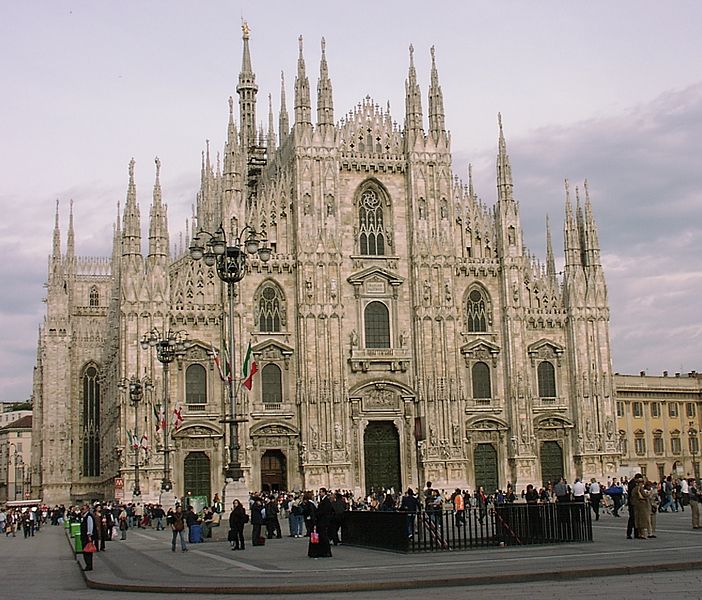 |
| Figure 6 |
Links:
Thursday, April 7, 2011
Stoicism
When man is faced with difficult and stressing situations, things tend to go wrong due to distraction from emotional needs. It's hard to go through with the task at hand when horrible things are happening to the ones you love. Around the year 300 B.C., a philosophical belief cropped up among human society, that was formed to do away with these emotional distractions and commitments. This belief was demonstrated by many great leaders at times of great danger and stress, and is referred to as stoicism. Stoicism is a belief that when one is confronted with hardships one must control his emotions; the events surrounding the death of Seneca are a perfect example of stoicism in action. There are may other written examples of Stoicism in history, and the death of Seneca is not necessarily the best example of that philosophy.
Seneca, a stoic philosopher and advisor to the Roman emperor Niro, had learned one night that he was going to be put to death by the very man he had been guiding and teaching for years before. The night Seneca had been told he was to be killed, his wife told him that she was going to die with him. However, during his execution, Seneca became worried for her sake. “Worn out by cruel anguish, afraid too that his sufferings might break his wife's spirit, and that, as he looked on her tortures, he might himself sink into irresolution, he persuaded her to retire into another chamber.” (Tacitus, 65 CE). Even during his own torturous death, Seneca was still worried for the well-being of those around him, as he wanted to be sure that his wife would not become upset, hearing him struggle. The philosophy of stoicism is that you must put your own emotions aside, to deal with the other situations at hand. Sometimes, this can mean the emotional well-being of those around you. At this time, Seneca was being tortured to death with knives, but the only thing he was worried about was his own wife's well-being. The extreme pain and struggle that he was under was pushed so far to the side that if it weren't for the constant physical reminder of the situation at hand, it might have been possible that Seneca would have forgotten what was happening to him altogether.
Some may look at the piece of evidence above and say that that could just be a demonstration of pure love and devotion to one's spouse. However, it is clear that by the later years of his life, anything, including the legal matters of those around him, seemed to matter more than his own emotions. "...even at the height of his wealth and power, he had been thinking about his life's close…" (Tacitus, 65 CE) Another clear characteristic of a stoic is that he is always looking towards what is happening next, so he can be better prepared. Seneca's wishes for his burial had been written many years before there was even a hint if discomfort between him and Niro, that he might even consider killing such a faithful advisor to him. In order to distract himself from showing any inkling of emotion in a time of great happiness, Seneca chose instead to plan for the future, in case the situation he found himself in ever became bleak or uncertain. Everything Seneca seemed to do was rational beyond comparison, certainly not the typical behavior of a man who had hit the highest point of his life.
Perhaps one of the most pressing instances of Seneca's stoic behavior occurred the night he was told he was to be put to death. “But he spared himself the anguish of a word or of a look, and merely sent in to Seneca one of his centurions, who was to announce to him his last doom. Seneca, quite unmoved, asked for tablets on which to inscribe his will..” (Tacitus, 65 CE). Right after being told he was going to die a painful and torturous death, the first thing Seneca looked towards was legal business. To him, the fact that his life was not going to last much longer didn't matter nearly as much as what was to happen after he had been killed. He wasted no time growing upset from this news, but instead simply replied to his troubled colleagues, "'Where,' he asked again and again, 'are your maxims of philosophy, or the preparation of so many years' study against evils to come? Who knew not Nero's cruelty? After a mother's and a brother's murder, nothing remains but to add the destruction of a guardian and a tutor.'"(Tacitus, 65 CE) Because he was so rational in his thinking, all of this made sense to Seneca. There was no shock, so there was no need for emotion. This is stoicism at its core; pure rationality.
Stoicism was incredibly relevant in the life of Seneca. Especially at the end of his existence, there were many hardships and struggles that he was forced to endure. Throughout all of the pain and torture he had to go through, Seneca made sure of one thing- that the task at hand was complete. The most important thing was not how he felt about what he had to do, but the result of what happened after it was finished. Seneca's death is one of the most relevant cases of this behavior, and is, in essence, what stoicism is all about.
Tacitus: The Death of Seneca, 65 CE. (1998, May). Retrieved April 6, 2011, from Ancient History Sourcebook: http://www.fordham.edu/HALSALL/ancient/tacitus-ann15a.html
11 Point Grading System
News Flash: Starting tomorrow, April 7th, we will stop doing dailies. Instead, we will be concentrating on the weekly essays. This week's rough draft we are finishing in class. From then on, every Wednesday you will have a rough draft due for Peer review (you'll receive participation credit: P/F for having the draft ready). On your rough draft, please underline the thesis statement and in a different color prove it is an opinion by writing the opposite side; underline one quote properly cited with in-text citations for each body paragraph; make bold your four-sentence analysis of each quote; analysis should explain how the quote serves to support your thesis. After peer review, a final draft will be due on Fri by Midnight.
Eleven-Point Critique (for peer reviews and grading of final drafts)
1. 5 paragraphs -- 5 to 7 sentences per paragraph.
2 Clear, coherent thesis statement expressing an opinion to be argued in the paper.
3. One quote or piece of sourcable evidence properly cited in APA format per body paragraph / proper in-text citation format
(author, date). APA format bibliography at end of paper. Use top-notch sources (BBC, Met Museum, Nat Geo, Internet History
Sourcebook, school-library based databases, etc.)
4. Four sentences per body paragraph analysis. This is your own analysis demonstrating how the evidence supports your thesis.
5. Solid conclusion demonstrating the validity of the argument.
6. Emphasis: Put strongest evidence in the fourth paragraph.
7. No 1st or 2nd person personal pronouns (I, we, us, me, my, myself, you, etc.)
8. Academic Tone: No slang, no contractions, make it coherent and readable.
9. Avoid generalizations -- give specific information; I'm not looking for you to write an "encyclopedia" article. I'm looking for
your ability to construct an academic argument.
10. Avoid unnecessary information: "more" quotes doesn't mean a "better" paper.
11. Original and honest writing voice and a creative and remarkable take on the subject.
Wednesday, April 6, 2011
Week 6 Daily 1
Read Tacitus' description of the Death of Seneca and Book One of M. Aurelius' Meditations. Find quotes within those two texts that help explain what Stoicism is all about.
- “But he spared himself the anguish of a word or of a look, and merely sent in to Seneca one of his centurions, who was to announce to him his last doom.
Seneca, quite unmoved, asked for tablets on which to inscribe his will..”
This quote is a very shocking representation of Stoicism. At this moment in time, Seneca was just told that he was going to be put to death. Instead of becoming greatly upset, he simply moved onto his next order of business which was his last will and testament.
- “Worn out by cruel anguish, afraid too that his sufferings might break his wife's spirit, and that, as he looked on her tortures, he might himself sink into irresolution, he persuaded her to retire into another chamber.”
This event was actually in the middle of Seneca’s extremely painful death, and yet he was still concerned with what was going on around him, and making sure things would still run smoothly.
- "...even in the height of his wealth and power he was thinking of his life's close."
This quote is fairly self explanatory in that even when things were going very well, Seneca was still worried about how things would go when they went bad. Seneca was demonstrating his belief in Stoicism so that he knew things would run smoothly when he was gone.
Friday, March 25, 2011
Thursday, March 17, 2011
5- 2. How was the Struggle of the Orders influential on later Roman politics?
Before the Struggle of Orders occurred, there were two types of people in Rome: the Patricians (the wealthy business class) and the Plebians (the impoverished working class). The Roman government was somewhat similar to the one we have in America today, with a senate that had representatives to meet and discuss issues in the community. However, Plebians were not accepted into the senate, so when new laws were made, or certain policies were issued, the Plebians had no say in any of it. The Struggle of the orders then broke out, and the cause was so strong that it almost caused a civil war. However, no one in Rome wanted something like that to break out, so instead, they came up with an agreement. One Plebian would be invited to join the senate, and he would have the say in which laws would or would not be passed. This had a huge impact on the Plebian community, because even though he himself could not form laws, he had veto power over all of the Patricians. This meant that if they wanted a law passed, they had to put the Plebians in mind before presenting it to the man in charge of the veto. In the end, this made laws more fair for everyone in Rome, not just the wealthy people. This sort of thing what somewhat revolutionary, because before any of this happened, the working class was never treated fair, no matter what civilization you lived in. It had always just been a fact of life that the poor people had no say in laws, and the rich man ruled the world. The Struggle of the Orders was the first event in history to change that standard around.
Wednesday, March 16, 2011
Alexander The Great- Was it Worth It?
Beginning in his early 20’s, King Alexander III of Macedon (more commonly known as Alexander the Great), spent his entire life on an escapade that resulted in his conquering of most of the known world. Having invaded countries from Egypt to India, and everything in between, it was clear that Alexander had been a very successful king and military leader. However, there were many losses in his journey. There were hardships due to starvation and dehydration, exhaustion, mental and physical setbacks, and numerous other issues. Alexander near well lost his mind before finally losing his life to a virus that he was never able to overcome (Alexander The Great). After he died, the empire collapsed, because Alexander had no one true heir. Through all of the victory and success, there was much failure and loss. The question here is, was it all worth it? Or should he have stopped his mission after getting even with Persia?
To understand Alexander’s motive for this extreme takeover, we have to take a look at not only his past, but at the past of his home, in Greece. The Persian Empire had always been an enemy of the Greeks, because about 150 years before Alexander, Persia had invaded and embarrassed the city-state of Athens, getting rid of their fleet of ships, and sending that part of Greece into a downward spiral of increasing poverty. (In The Footsteps Of Alexander The Great) Alexander claimed his main motive for his invasion of Persia to be for vengeance upon this deed. (Alexander The Great, Wiki) But if this was true, wouldn’t he have stopped at this point?
It is said that power is the sort of thing that you can only want more of, especially when it is obtained all too easily. After Alexander had successfully defeated Persia in his efforts to avenge his ancestors, Egypt became the next target. The Egyptians had also been long-time enemies of Persia, and they welcomed Alexander as a pharaoh when his army invaded. (Alexander The Great) This event, no doubt, made Alexander feel even more powerful than he had originally felt, and it compelled him to want more. However, while Alexander was off taking over the rest of the known world, acting as the son of a god, it seems as though he had forgotten all about how things are being handled in the empire that he had already obtained. He managed to put generals in charge of each area, but those generals then began to get the idea that they were the real rulers of that part of the country, and that’s how it was going to stay, even after Alexander’s untimely death (In The Footsteps Of Alexander The Great).
After he had conquered the area which is now seen as modern-day Afghanistan, some of Alexander’s men believed that he was growing a bit incompetent. At one point, he had gotten in a drunken rage and ended up killing one of the men in his army that was very close to him. (In The Footsteps Of Alexander The Great) He felt remorse for it after he was sober, but this event was a major turning point in Alexander’s command. More and more of his men started to turn against him, and the first plot for his murder had been discovered. These men were later tortured to death, but no doubt it changed the way Alexander thought about his actions ahead of time. (In The Footsteps Of Alexander The Great)
So throughout his whole journey, Alexander The Great accomplished many great feats and gave glory to many other brave men. However, his death resulted in much confusion in his empire, which seemed to fall along with him and cause much violence and chaos in those areas., some of which is still evident in today’s society.(Alexander The Great) Though his original plan was just to seek revenge against the Persian empire, (Alexander The Great, Wiki) much more had resulted. Maybe if Alexander had kept his boundaries a bit smaller, the chaos that resulted from the fall of his empire would not have happened. In his case, lack of control was most likely his biggest fault.
Bibliography:
- Alexander The Great Wikipedia Page
- Video: "In The Footsteps Of Alexander The Great" Hosted by Michael Wood, produced by PBS
- "Alexander the Great." Macedonia FAQ. Web. 10 Mar. 2011. <http://faq.macedonia.org/history/alexander.the.great.html>.
4b- 11. How did Alexander create his own myth?
The easiest way to answer this question is to take the specifics completely out- how are myths created in general? This question is easier to answer. Simply leave out the details and tell the story a little differently every time. By doing this, people start spreading the story around, and if someone hears two different versions of that story, then they try to make sense of it by combining both versions. Then you have a completely different and 100% original story that you didn't tell, getting spread around. Alexander made sure to keep himself vague to his citizens. He never let his personal life get in the way of his conquest, which left an air of mystery between his people, so when rumors spread about him, sometimes he'd hear the other end of it, decide he liked what he heard, and just go along with it. When he entered Egypt, they called him the son of a god, and this title left an impression on him. By the time Alexander had reached India, he truly believed that his father was not Philip II of Macedon, but an immortal ruler of the world. When you put on an act for long enough, you start to forget who you originally were, and you believe the act yourself. Not to mention that as his journey went on, Alexander lost more and more of his sanity, most likely due to the pressure and confusion of ruling such a massive empire. The truth is, Alexander created his own myth by believing that he was something different. Once you convince yourself, it doesn't take much longer before other people start to believe it, too.

.jpg)

.jpg)


4b- 9. Could a force like Alexander the Great exist today? Why or why not?
I do not think that a force like Alexander the Great could exist today. When he first took power, the people in his army were forced to follow him wherever he went, or there would be dire consequences. After a while, they see that he is a good leader and someone they would want to follow anyways, but before that was known, their only reason for following him was force. Today, if someone were to try and take control by force, there would be too much contact with outside forces for it to work. Say someone was trying to slowly take over the U.S. by military force. Someone would be bound to get online and start telling others about it. Media travels remarkably fast these days, so if a threat even seems a little possible in one area, an entire country and all of their allies can be lined up to stop that force in no time. Everything in today's age is so instant that it would be impossible to take over our entire known world, especially because we know about every piece of land on this Earth, making the known world the entire world. Alexander's force was great and powerful and definitely worked for his time, but it wouldn't be as successful in today's age. If worst comes to worst, and a great power seems just completely unstoppable, there is always the option of nuclear weapons to be sure to get rid of the threat, if necessary. However, this would have to be a last resort, because one nuclear launch would lead to another, and that could mean the demise of humanity.
4b- 7. What do you think should have been done after Alexander's death?
Alexander's death came very untimely and caused much confusion in his empire. Though he had left generals in charge of certain areas, there were no definite boundaries, so when they were left to themselves, many a battle broke out. The hard thing about Alexander's empire was that it was literally most (if not all) of the known world. That's a big territory for one heir. So leaving one person in charge of his empire probably wouldn't have been the best idea for Alexander at that point, anyways. However, I think that when Alexander became fairly sure that he was going to die, it would have been intelligent to set specific boundaries for separate provinces or city-states in his empire, and then left one person in charge of the representatives for each division of his empire. This would be a government sort of like the one we have in the United States, where there are many different heads of state, but then there is one head of the heads of state, so that there are never any major disagreements. This is sort of the way he was running things while he was alive, by leaving people in charge of each area, only it would need to be more defined and clarified in order to avoid chaos. Though this plan might seem a little complicated, I do think it would have been successful, and who knows? Maybe that region of the world would still be a country or union today.
4b- 6. Was Alexander the Great a "good leader"? Compare/Contrast with Pericles.
There is a difference between a great leader and a great ruler. To be a great leader, it takes charisma, strategy, and, of course, followers. In order to be a great ruler, one must always have his people's needs in mind, and he should always be fair to everyone that he reigns over. I believe that Alexander while Alexander was a great leader, he was not the best ruler. I see the vice versa with Pericles. He wasn't much of a leader, because there weren't too many movements that he lead his people on. However, he kept Athens thriving during his rule, and his citizens seemed to like him, so I would say that he is a fairly good ruler. Alexander lead an army to the ends of the Earth (somewhat literally), and was victorious for most of the journey. He had this thing about him that just made him likable and someone who could relate to his followers. It was easy for him to get people to do what he wanted, so he did. But you can see that after he conquered a place, he wasn't very worried about how they would thrive when he left. That evidence is there just from seeing that he never left a clear heir for his empire. Pericles, on the other hand, had lead Athens through some very tough times, and tragically died from a plague. This is where the two men are similar. Neither of them had a set successor because illness came and unexpectedly ended their rules. It's kind of ironic how that all played out, actually. No matter how powerful Alexander was, no matter how reliable Pericles was, it was sickness that caused them to lose it all in the end. Overall, I would say that Alexander was a great leader, but he could've worked a bit more on ruling his empire, instead of expanding it.
4b- 4. Describe relations between Egypt and Persia before Alexander came on the scene.
Before Alexander "came on the scene," tensions between Egypt and Persia were very high. Persia had attacked, conquered, and taken over Egypt before Alexander conquered Persia, so Egypt was under the control of the Persian Empire. This brought much confusion and dissatisfaction, because Egypt's religious beliefs were very different from Persia, so Egypt felt as though their culture had been ripped from their lives and that they were being forced to live a totally different lifestyle. After Alexander conquered Persia, Egypt was so overjoyed that they welcomed him as a god. There was absolutely no military force involved in this takeover; they simply made him pharaoh after he overtook Persia. This probably helped Alexander be more kind to the people of Egypt, and be a little more free-willing when it came to the things that he changed about their civilization. Another thing that made Alexander sort of biased towards Egypt was their deep hate of Persia. Alexander's entire reason for going off on this escapade was to avenge his father and his homeland by taking over Persia. The fact that the Egyptians supported his cause so much really helped him to like them better than he would like another territory that he overtook.
4b- 3. Based on what you know about Aristotle, do you think Alexander had listened carefully to his tutor?
Politically speaking, I don't believe that Alexander followed the teachings of Aristotle very closely. The wikipedia page on Aristotle gave this quote, "The political partnership must be regarded, therefore, as being for the sake of noble actions, not for the sake of living together." This is saying that communities should be small in order to keep them working properly. Alexander, however, had the mindset that bigger was always better, no matter what the reason or cost. This has always been my personal disagreement with Alexander The Great, because I think that he could have been a very remarkable ruler if it weren't for the fact that he just kept going further and further, never actually stopping to establish a culture or community. This is why when Alexander died, his whole empire seemed to collapse in the confusion. I'm sure it took a while for the news of his death to reach all the way back to Macedonia, which was his birthplace and starting point to begin with. It seems as though Alexander wasn't trying to build an empire, but that he was playing a game to see how many places he could get his name known in. He may have won his game, but if he had payed more attention to his tutor, Aristotle, he may have lived a longer, and possibly happier life. I do think that if he had found a stopping point early on, Alexander could have kept his health and sanity for a much longer period of time.
4b- 1. What compels someone to lead others?
If you look through the records of some of the world's greatest leaders, you'll find many different motives for their rules and conquests. Some rule for revenge, others for riches, others to benefit their communities, and still others just for the concept of being in control. No great movement was ever pursued without someone leading the herd. And every great movement is started with an idea. That idea has to be born into someone's mind at some point, and that person is more often than not the leader of that movement. Leadership is a chain reaction of events, and a lot of times, leaders don't even see what's happening until they're thrust into that front position, and they have to decide what to do. The courageous will take matters into their own hands and dive headfirst into whatever conflict is at hand. Others might decide to take this position of leadership and give it to someone else, if they feel like they can't handle what's ahead. In the case of Alexander the Great, he was angered. His father had been killed, and his homeland embarrassed. He knew something had to be done, and he had to be the one to do it. It is seen that Alexander's drive to lead was revenge. However, in later times, you can see that other leaders (like George Washington) lead for the good of his people, or because of his hunger for power (like Adolph Hitler). There is a movement behind every leader, and a story behind every movement. That story is what compels people to lead others.
A Bad Haircut
Characters:
· Irena (main character, daughter of Damen)
· Damen (barber, father Irena)
· Corydon (announcer)
· Socrates (philosopher)
· Old Man (tells news of great loss to the Spartans)
· Athenian 1
· Athenian 2
· Athenian 3
Scene: Camera closes in on a girl sitting on a stool with a black background. Her name is Irena. She is dressed in Athenian clothing, and she is sobbing. You can tell that she has been through a lot of sorrow, and she looks years older than she really is. She looks up to see the camera, and begins to wipe her eyes.
Irena: I’m sorry, I didn’t see you there. Excuse me for acting like this; it’s just that my homeland has recently suffered a great loss. The Spartans- well, they’ve taken everything from us. I don’t think I’ve ever heard of Athens losing so much in so little time.
Scene: The streets of Athens; many people bustling around, trying to get to where they need to be. The camera is focused on the path of a girl who looks like Irena, only happier and much younger. The frame freezes, and Irena begins a voiceover.
Irena: See that girl? That’s me. It was only about a year ago, when all of this was starting. I’m headed down to the shore, where my father’s barber shop is located. I get to go there and help him clean out the shop every afternoon before closing. I was running a little late today, and ended up running into the square just as an announcement was being made.
Scene: Frame resumes. Irena gets caught in a large crowd that is forming a circle around one man, who is holding a piece of paper in his hands. People are shouting over one another, trying to guess what the news might be.
Athenian 1: What is it, Corydon?
Athenian 2: Yeah, what’s going on? Is this about the thieves that have been going through the shops lately?
Athenian 3: No, you ape! It’s got to be about Sparta. Pericles has been talking about the Spartans for weeks!
Corydon, a jittery man with lots of nerves in front of large crowds, clears his throat and raises the paper in his shaking hands.
Corydon: P-p-precisely, Dard. (begins to shout) Excuse me! Excuse me! Here here! Percilies has come to a decision about our conflict with Sparta! All men who are warriors in the Athenian military are to report to their base tonight, as our fleet of ships leave at dawn! Your preparation is over, men! Rest well tonight, for tomorrow, we dominate!
Murmurs begin to spread through the crowd like wildfire. One man in the back clears his throat. All focus changes to him.
Socrates: I don’t believe this is the right choice. Isn’t there any way to make peace between us and Sparta, without killing off so many of our men?
Athenian 1: Who says we’re going to kill off a bunch of our men! We can handle the Spartans!
Socrates: Is that so? How do we know this?
Corydon: Enough! Pericles has spoken! Men, get prepare yourselves!
Scene: Camera focuses in on Irena once again, as she begins to move again. Though she still moves through the crowd fairly cheerfully, there is now a worried look on her face.
Irena: (shoving her way through the crowd) Excuse me. Pardon me. I have to get through, my father is expecting me! (she pushes with more force, and finally she is free from the crowd. Camera fades as it shows Irena running away, towards the setting sun that leads its way onto the shore.)
Scene: Damen’s barber shop- there are blades hanging on the walls, and a few chairs lined up under the blades. Damen takes out a broom and begins to sweep hair from the floor of the tiny shack out the door. Irena hurries in and nearly runs into Damen.
Damen: Irena! You gave me a scare. Why are you late?
Irena: (takes broom from Damen) Sorry, father. There was announcement in the square today, and I couldn’t get through the crowd. (begins sweeping, picking up where Damen left off)
Damen: Well, out with it, girl. What was the announcement? (walks over to table, picks up cloth and takes a blade off the wall. Irena begins to speak as he cleans the blade.)
Irena: Pericles has decided to send the warriors off into Spartan territory for an attack. I’m most certain that our Navy can handle it, but I’m worried for Adelphos.
Damen: (puts blade on table with a *bang*) What’s there to be worried for? Adelphos is a brilliant fighter! And very young and healthy! Your brother will be a hero! Our family name will go down in history!
Irena: (begins to mouth the last scentence of Damen’s response) Father, I know. You’ve told me this many times. But I still worry for him. Sometimes heros have to die to become famous.
Damen: Then die, he will. But with honor. And that is what matters.
Irena: I suppose so, father…. (continues sweeping as scene fades out)
Scene: We are brought back to the more somber Irena. She has a distant look on her face, and she continues her story.
Irena: Athens was sure, at that point, that we were going to conquer the Spartans. We had a strong Navy, clever men, and powerful generals. Because they were waiting for us along the shores, the plan was that our men go around from the South, and sneak up on the Spartans from behind. We were getting news about once a week saying that our men were getting closer and closer to land. But after they had reached the area of the battle, the news stopped. We heard nothing for almost a year. But we all just assumed the battle was taking longer than expected, and our men would be home soon. Until, that is, that fateful day in my father’s shop. (camera scene begins to change, but Irena’s voiceover keeps going) It was a busy day, so I was allowed to stay in the shop all day and clean up as my father was going. When the last customer of the day came in, I was very tired.
Scene: Damen’s shop again. Around the same time as before, this time, I rena is crouched in the corner, and an old man is on one of the seats, pulled away from the wall. Damen is behind him, holding his hair up to a blade, beginning to trim it.
Damen: If you don’t mind me asking, sir, where are you from?
Old Man: I’m a traveller. I was born in Athens, but I’ve been moving around since I was about 15. I do enjoy the nomadic life.
Irena: (jumps up) Oh, that seems so exciting! Do you have any stories to tell? What kind of-
Damen: (frustrated) Irena! Girls are only to speak when spoken to! Now sit back down and do not bother this man.
Old Man: No, it’s quite alright. There is something I witnessed recently that someone ought to know about. It was just so tragic.
Damen: (puts down blade, picks up new one) Tragic? Go on, if you please?
Old Man: Oh, it was just terrible. I met with the general of a Navy, over near the Spartan territory. He said he was one of the only ones from his fleet left. Apparently they had gone over to attack Sparta by surprise. But the men kept arguing on their way over to the territory, so there was never clear direction. Worse than that, someone had betrayed them, and the Spartans had found out about the sneak attack. So not only were they unclear about what they were to do, but the Spartans were already waiting for their attack. Many of the men ended up just drowning on their way off the ship, and anyone who didn’t drown was killed in battle, no contest. This general, he said he’s one of about 50 left. They’re going to head back to their homeland soon, but they don’t expect a very warm welcome.
Damen drops his blade and falls backward. Irena screams and runs to her father.
Scene: Back to Irena. She is crying again, and this time, she doesn’t try to hide it.
Irena: We found when the 50 men came back that Adelphos had been one of the men to drown on his way off of the ship. I will never see my brother again, and now the Spartans are after us. I don’t know much of what’s going to happen next, but I fear that our future as a community is quite bleak.
Subscribe to:
Comments (Atom)